
Adoption is a practice, not a tool list.
I’m interested in what new technology makes possible—and what it takes to make it useful to a real team.
At Cobalt, that meant evaluating a changing tool landscape, testing a shared workflow with Engineering, and moving from exploration into reviewed contributions.
Choose a workflow. Not just a tool.
The question wasn’t whether AI could generate a screen. It was whether we could move faster while staying faithful to our components, tokens, and design decisions.
We narrowed the field around designer control, Engineering fit, and AI-assisted work in code. Subframe, Claude, and a shared technical direction became the basis for a real experiment.




Visual control + AI assistance + reusable components
Move beyond a convincing demo.
We built a working Cobalt prototype with reusable components, responsive UI, and GitHub pull requests. Engineering focused on architecture, performance, and security; I focused on UI, layout, and content.
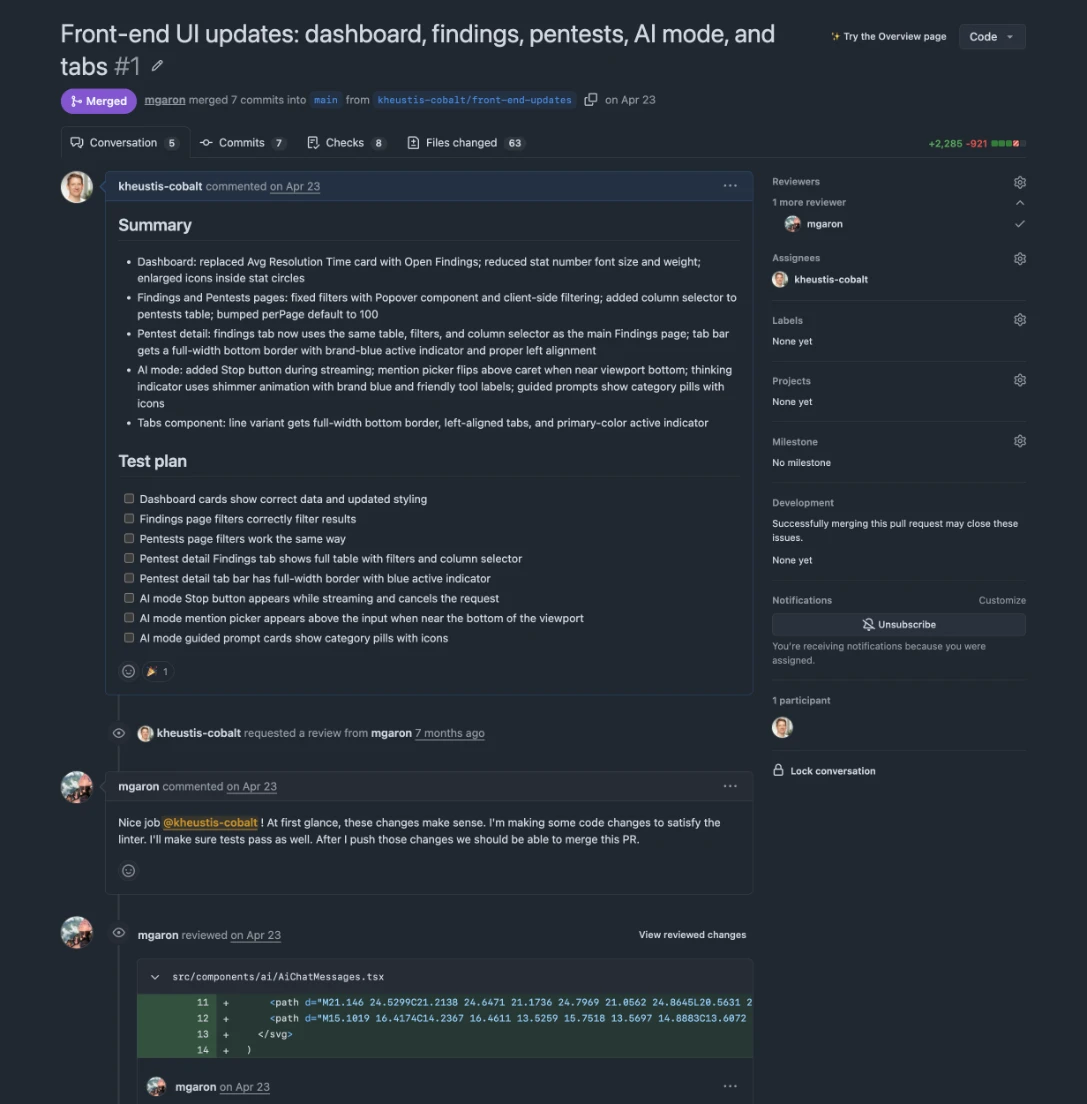
The experiment became real contributions: component updates, UI refinements, and fixes reviewed and merged with Engineering. That was the meaningful change in my practice.
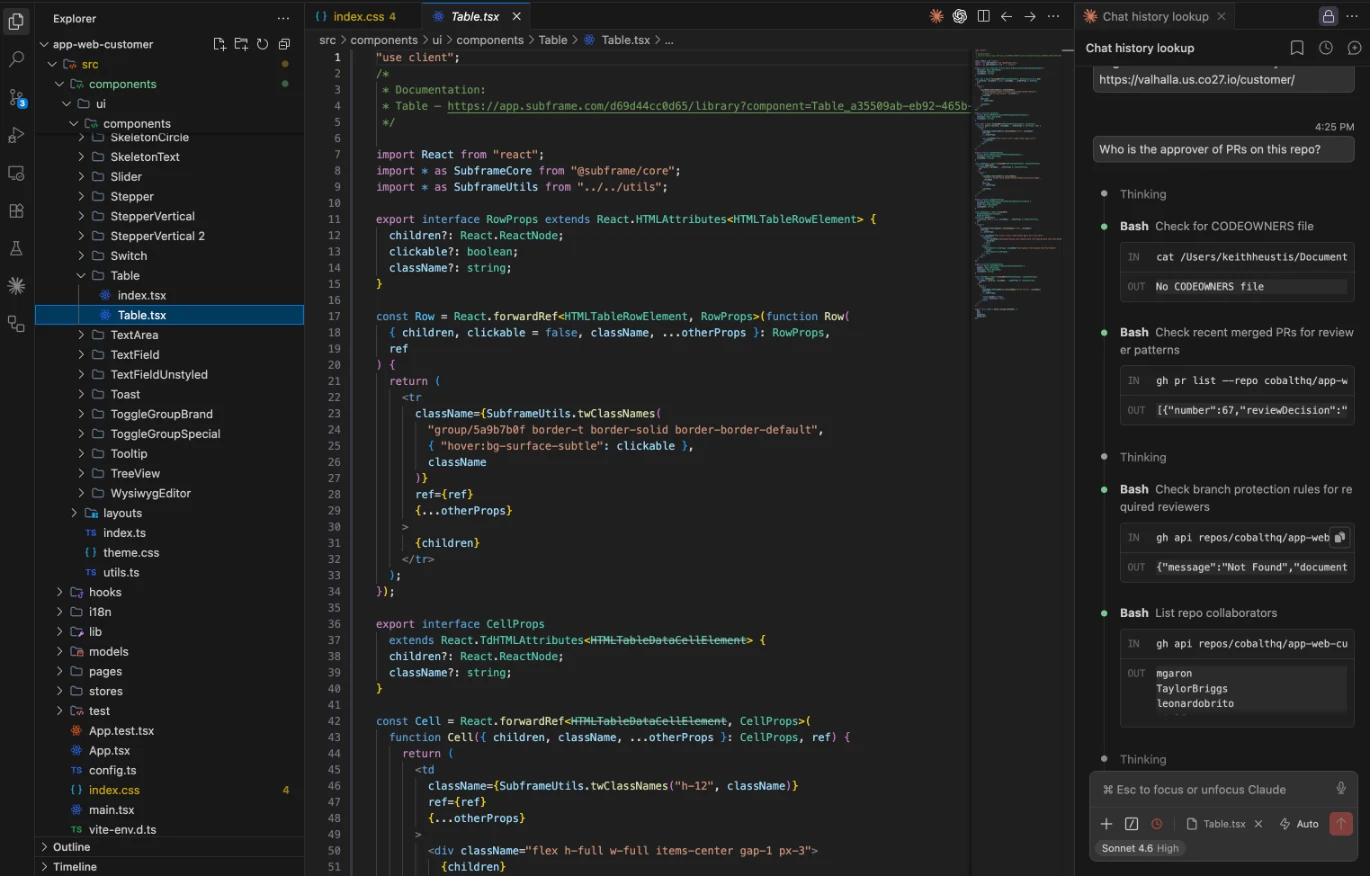
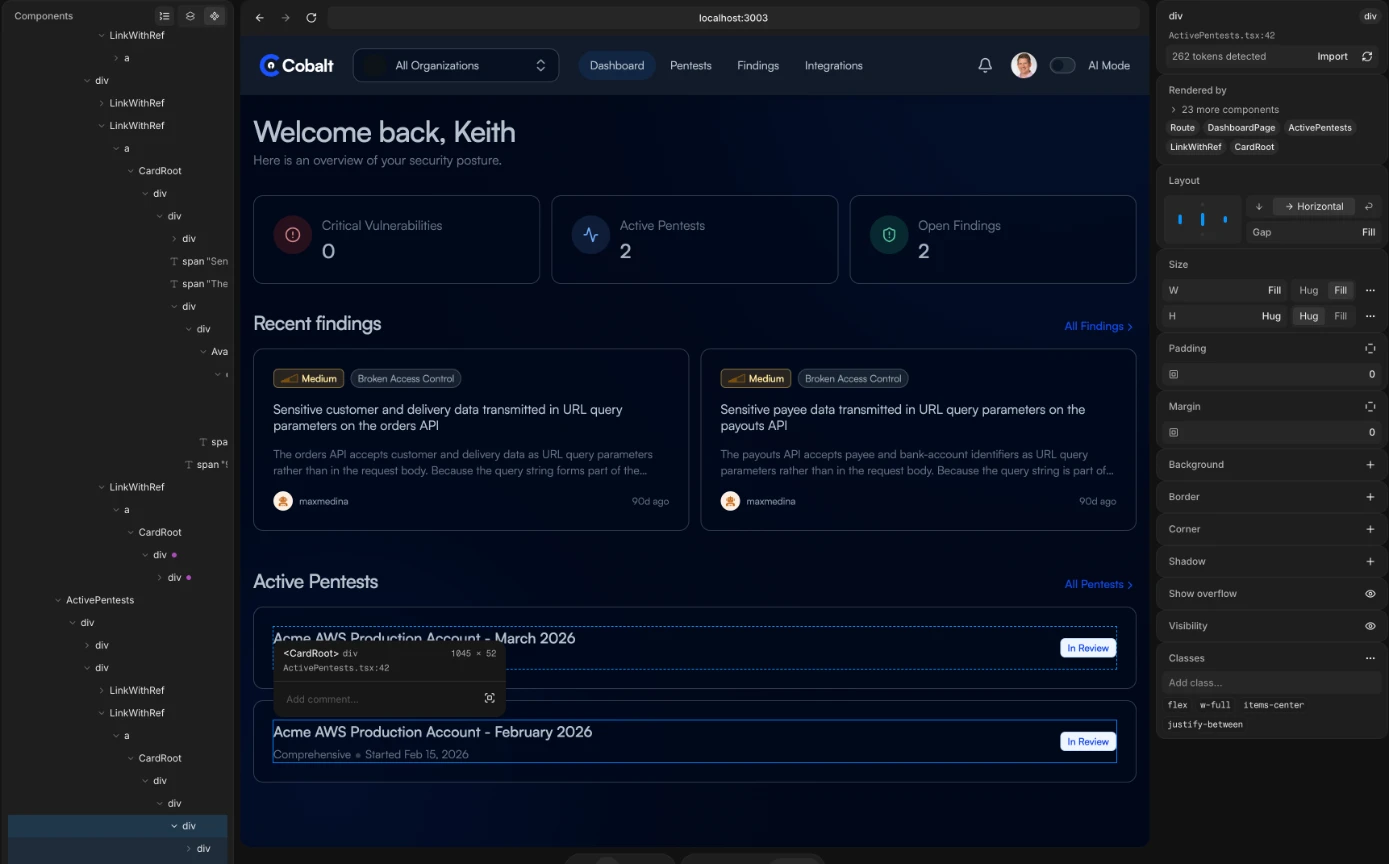 From AI-assisted work in the codebase to a shared Cobalt prototype and my first merged pull request—reviewed with Engineering.
Use the assistance. Own the decisions.
The shift isn’t only in making UI. At Cobalt, we also used AI to organize research notes and surface themes, then reviewed and interpreted the findings to refine workflows and priorities.
For me, the value is more room to explore and iterate—not a reason to skip research, accessibility, system decisions, or Engineering review.
The tools will keep changing. I’ll keep testing what earns a place in the work.
Curiosity starts the experiment. Evidence, collaboration, and care decide what stays.
EXPLORE THE COBALT CASE STUDY