Strong foundations. New ways to build.
I build design systems that help teams work together—not just make their screens look alike.
Across enterprise portfolios and growing product teams, I’ve shaped system architecture, shared components, and the practices that keep them useful. Now I’m bringing that experience into AI-assisted, code-connected ways of working.
EXPERIENCE ACROSS ALLSCRIPTS · ORACLE · CITRIX · PENDO · PAYLOCITY · COBALT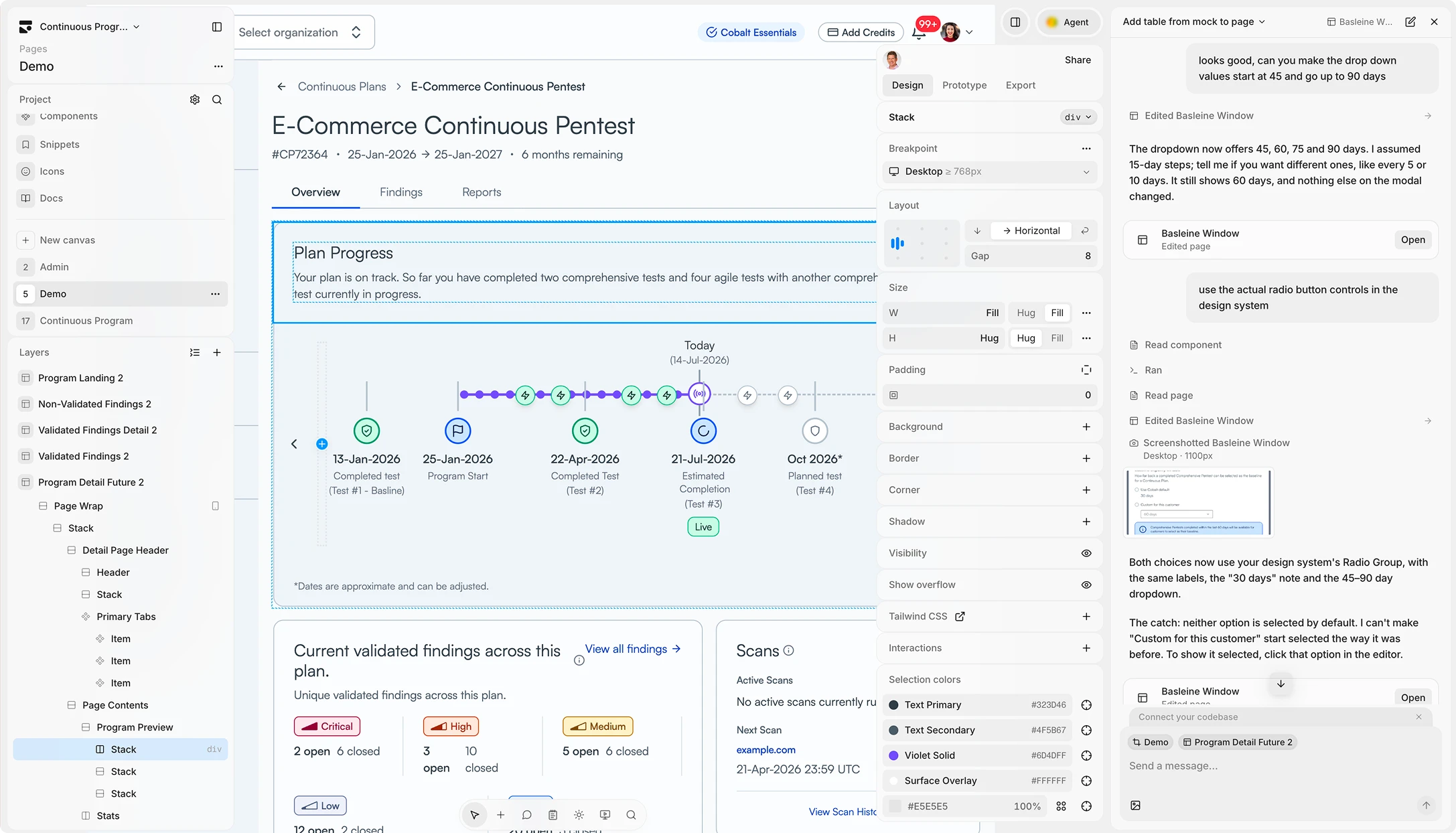 The system in use at Cobalt: designing Continuous Pentesting with shared components in Subframe.
Fit the system to the organization.
There isn’t one right way to structure a design system. The product portfolio, technical landscape, and people using it should shape what’s shared—and where teams need room to adapt.
At Citrix, I architected separate but connected systems for different business lines, with a shared foundation. At Paylocity, I shaped a unified system for web and mobile. Different structures, with the same goal: make consistent decisions easier without flattening every product’s needs.
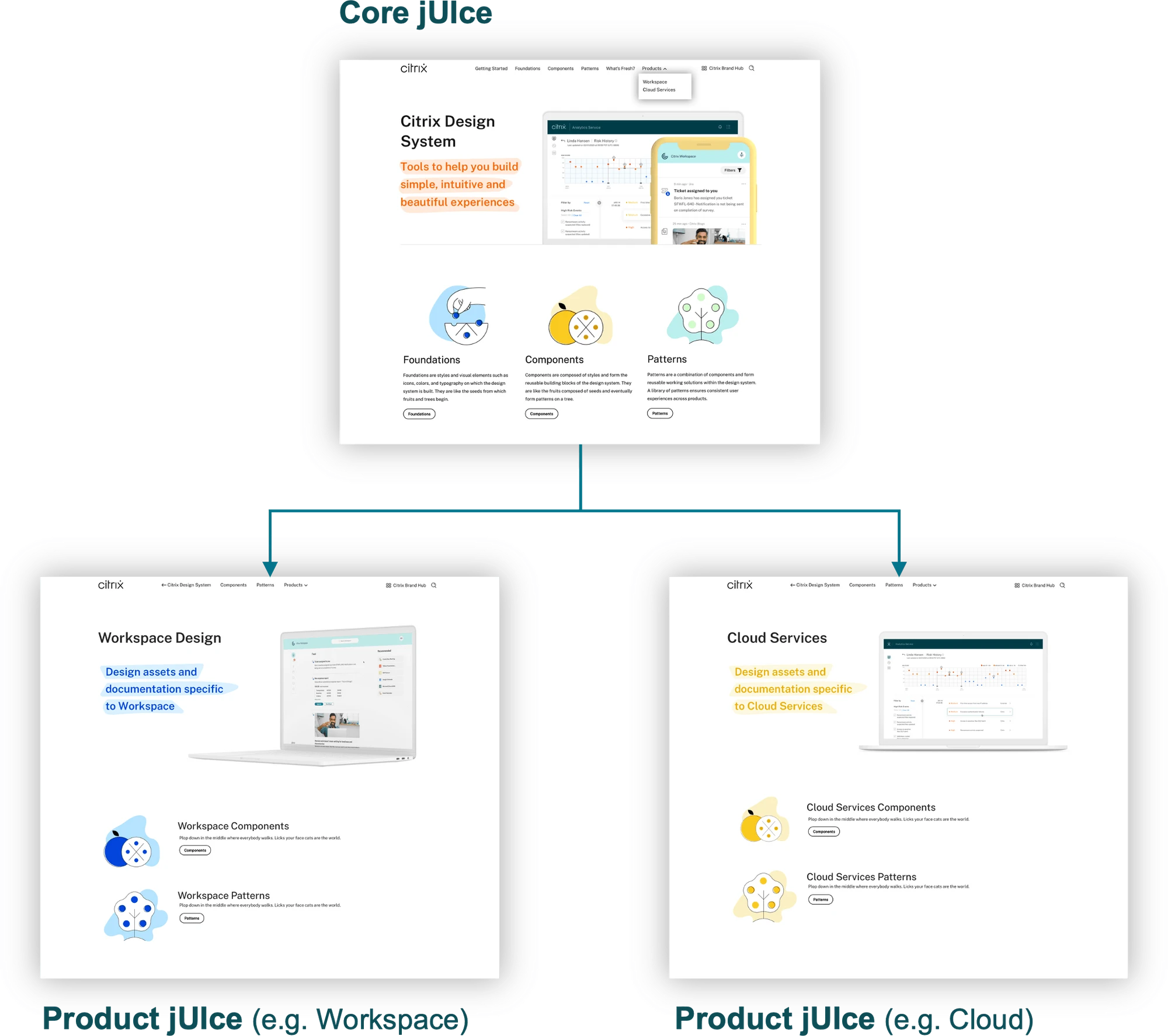 Citrix: a core system, extended for Workspace and Cloud Services.
Shared intent. Room to adapt.
Underneath the structure, semantic tokens describe what a decision is for—not just what it looks like. That creates a foundation for theming, accessibility, and change.
A surface token names a role. Its value can change without redefining that role across every component.
Make it useful. Keep it useful.
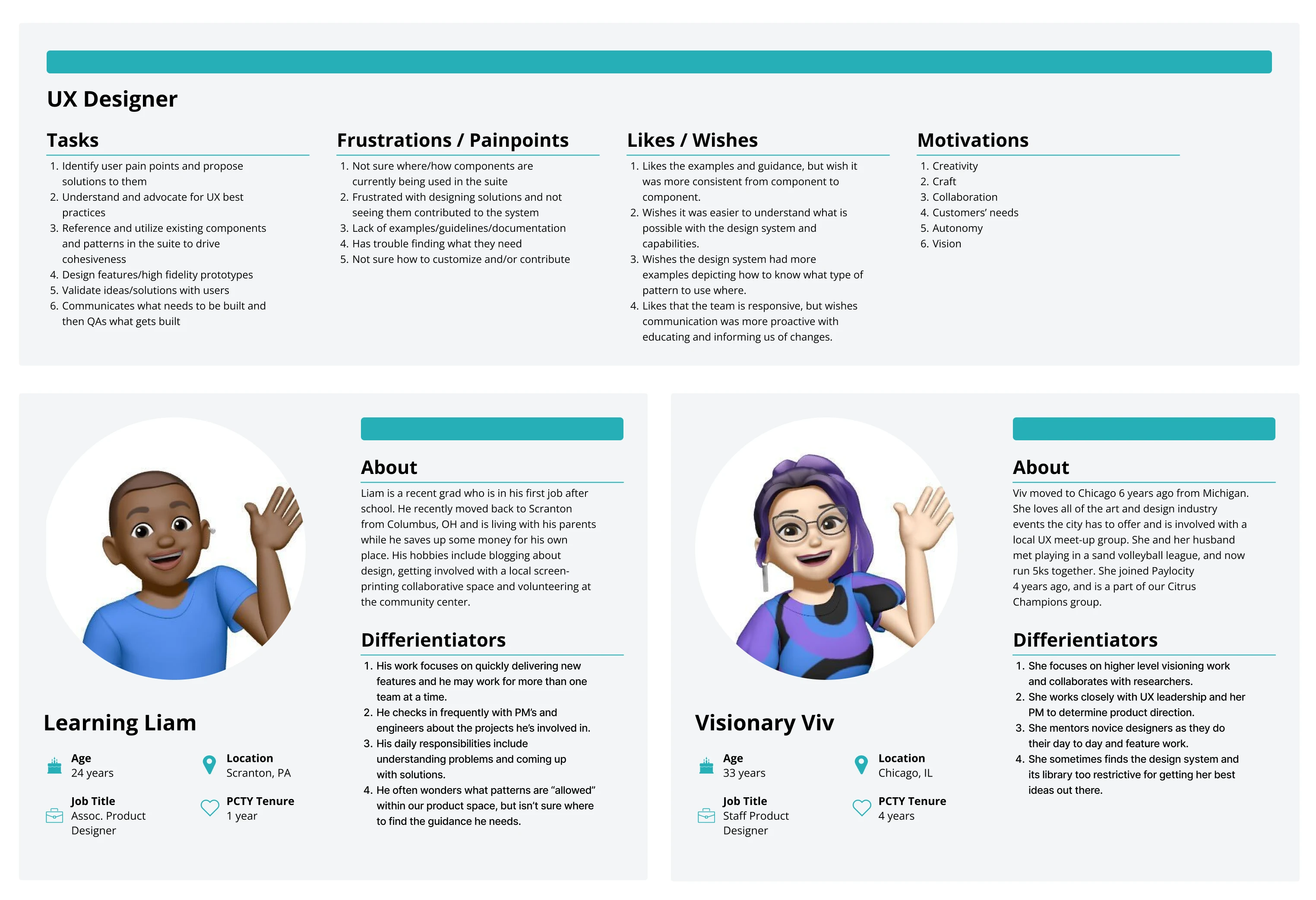
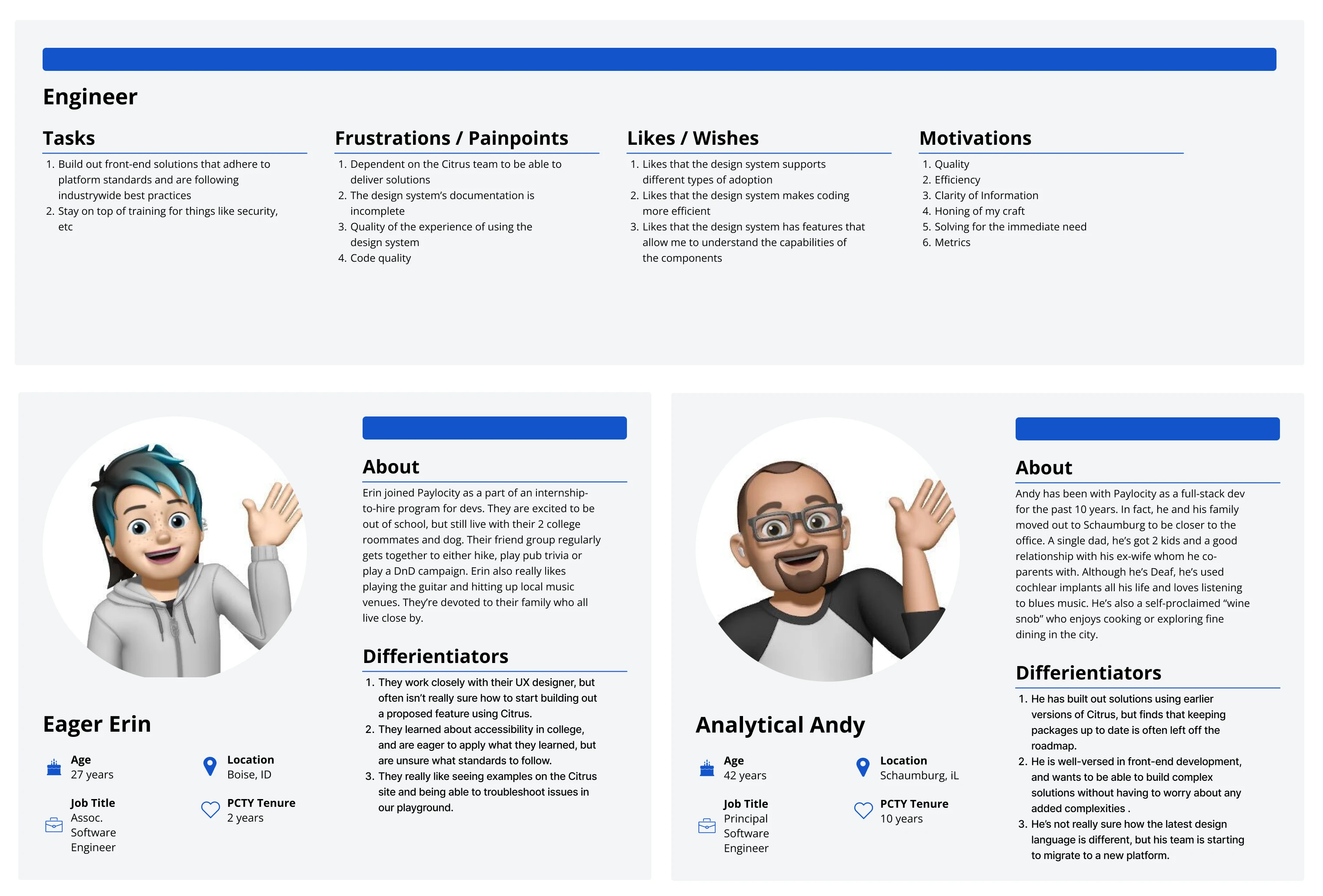
The system has users, too. At Citrix and Paylocity, I led research with designers, developers, and product managers to understand what they needed from it. That shaped how we prioritized work, named things, and explained how to use them.
Adoption also needs ownership. I’ve worked with centralized and federated teams, contribution models, and documentation across Figma, Storybook, and dedicated sites—so the system can grow without becoming everyone’s problem and no one’s responsibility.
Evolve the way the system gets built.
AI can produce an interface quickly. The harder question is whether it uses the right components, follows the system’s decisions, and fits how the team actually builds.
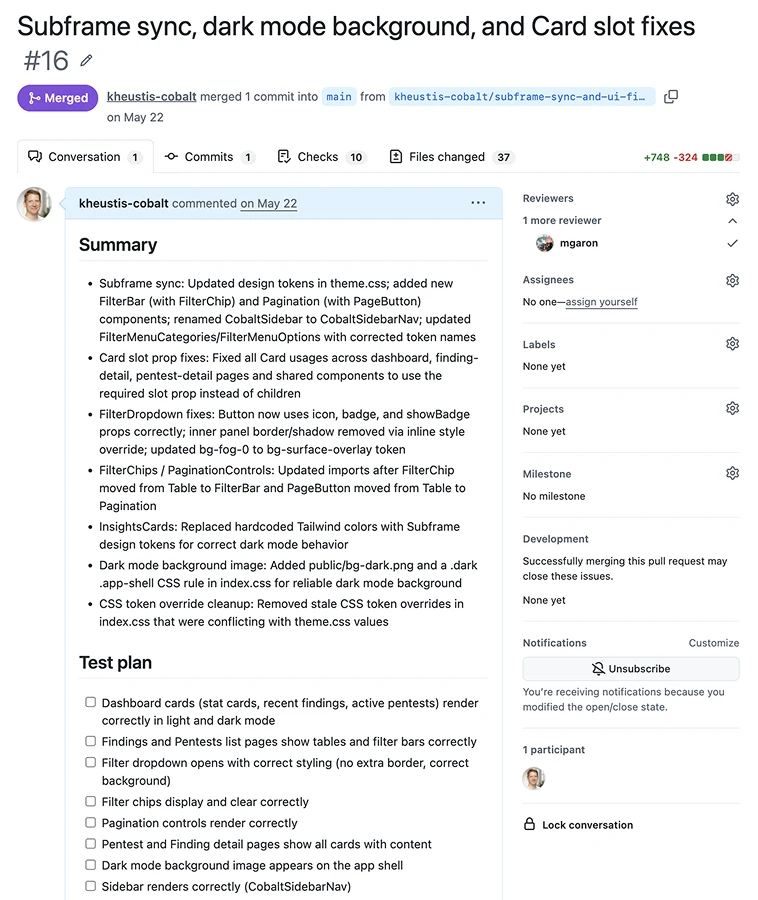
At Cobalt, I evaluated a new workflow around that question. We tested Subframe, AI-assisted coding with Claude, and a shared technical direction with Engineering in a working prototype—not just a convincing mockup.
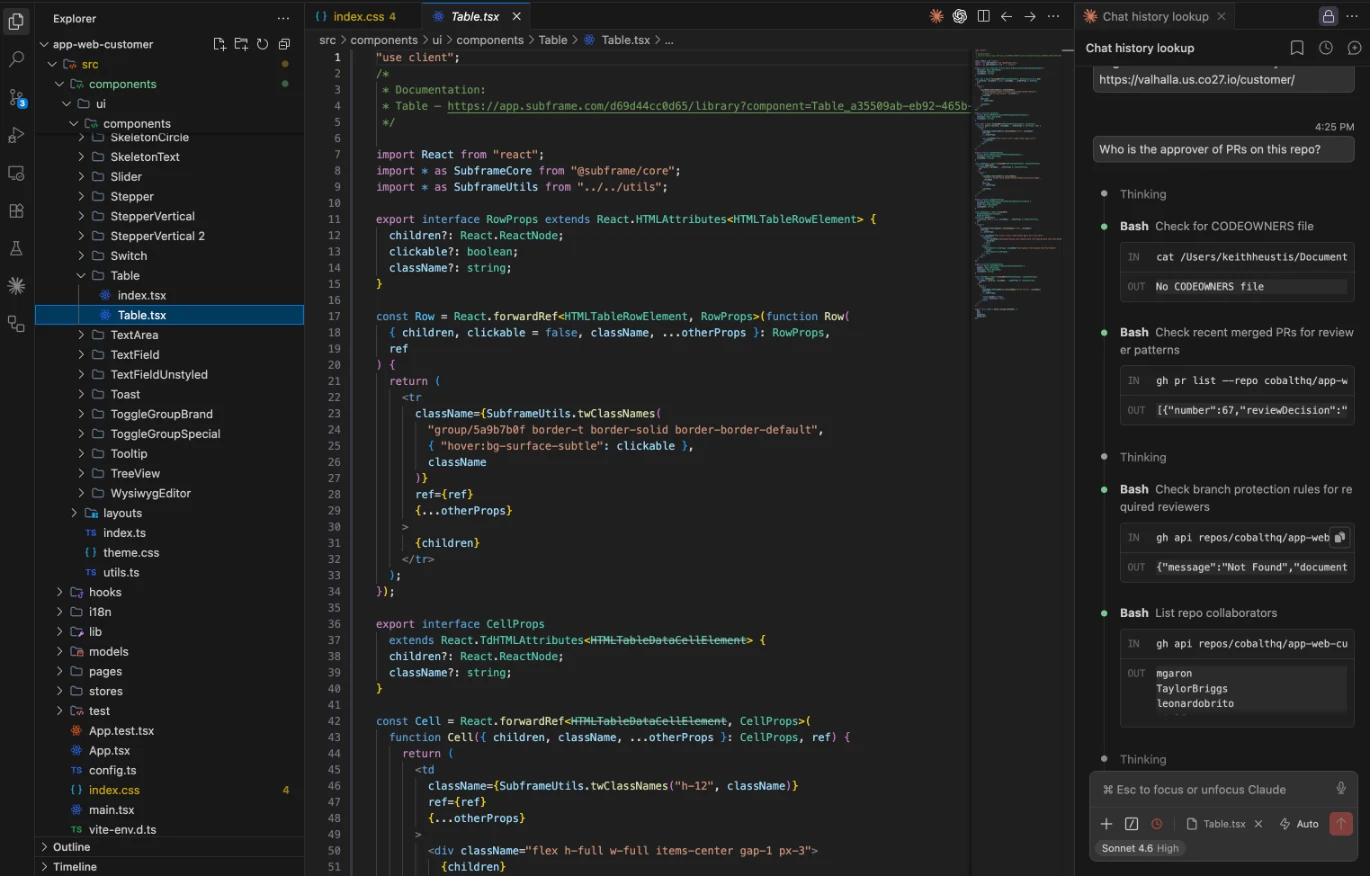
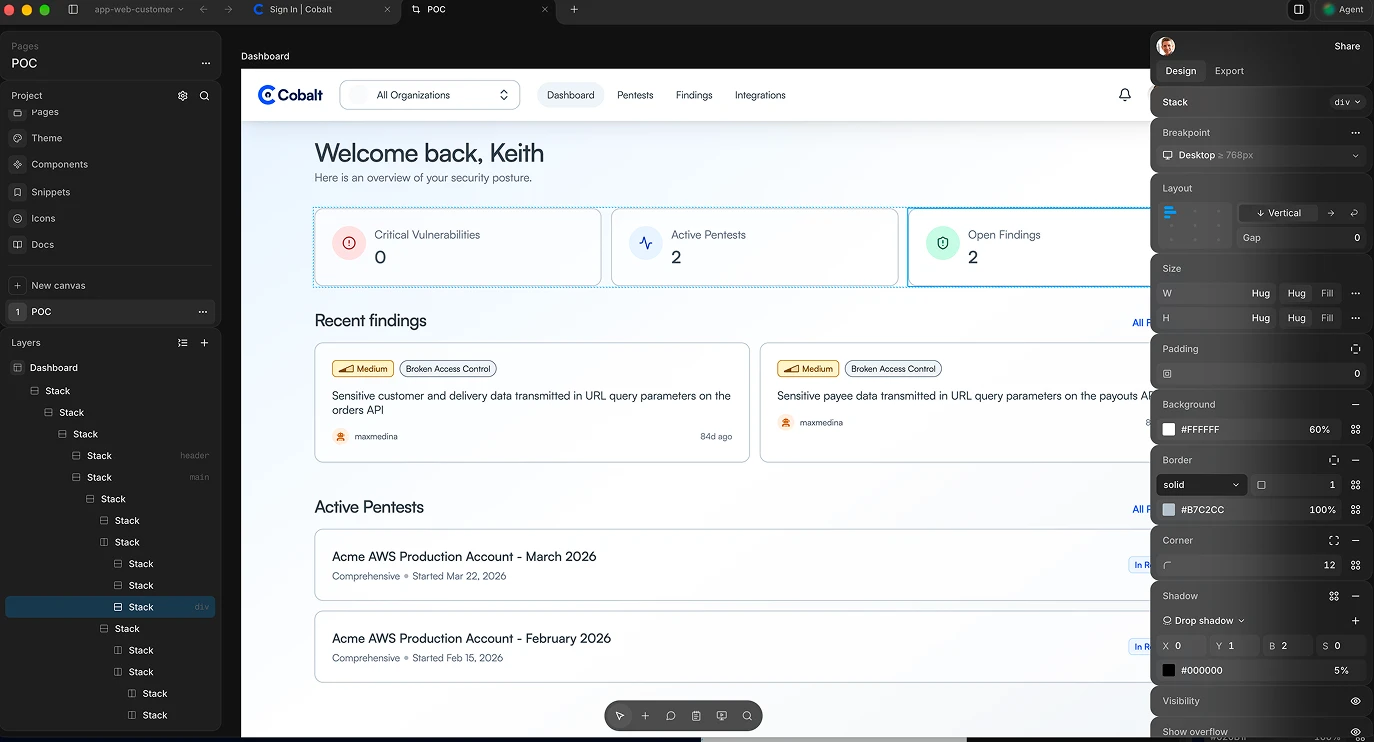
Same standards. A shorter distance to code.
With the workflow proven, I built out tokens, reusable components, and usage guidance in the new visual language, then began applying them to production UI for Continuous Pentesting.
Engineering focused on architecture, performance, and security. I focused on UI, layout, and content. Shared review and iteration connected the two.